What is Meibomian Gland Dysfunction?
Meibomian Gland Dysfunction (MGD) is one of the leading causes of dry eye. The meibomian glands are tiny oil-producing glands located along the edges of your eyelids. Their job is to release oils called ‘Meibum’ that form the outer layer of your tear film, helping prevent tears from evaporating too quickly.
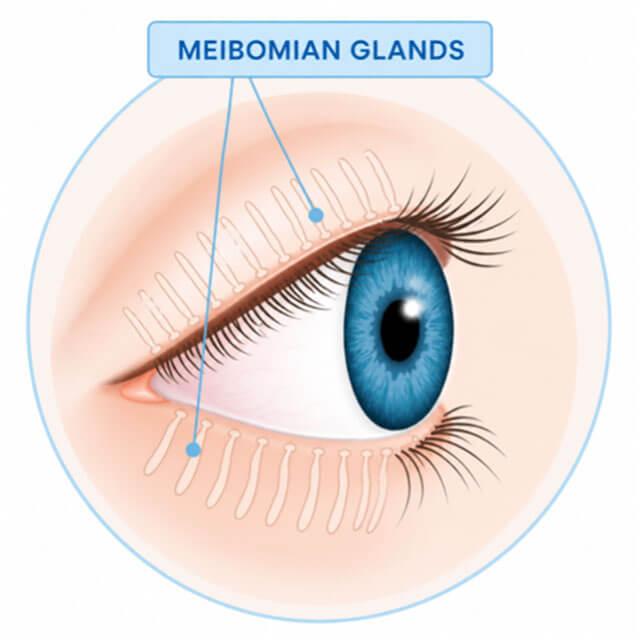
When these glands do not function properly, the meibum produced can become much thicker, discoloured and even paste-like. When this occurs, tear film becomes unstable. This can lead to dry, irritated, or watery eyes. MGD is particularly common in adults over 50, but it can affect people of all ages, even in children and especially those who spend long hours on screens.
If left untreated, MGD can worsen over time, the glands become blocked then atrophied leading to chronic discomfort, inflammation, and even damage to the surface of the eye. The good news is that with the right care and treatment, it is a manageable condition. The earlier the treatment the better the prognosis.
Common Causes of Meibomian Gland Dysfunction
Several factors can contribute to the development of MGD. In many cases, it’s a combination of lifestyle, environmental, and health-related influences.
Understanding what causes meibomian gland dysfunction is important, as addressing these triggers can significantly improve symptoms and treatment outcomes.
Common causes include:
Ageing
Gland function naturally declines over time, making MGD more common in older adults.
Prolonged Screen Use
Reduced blinking leads to poor oil distribution.
Hormonal Changes
Particularly during menopause, which can affect oil production.
Lid Margin Inflammation
A key contributor to blocked glands.
Skin Conditions
Such as rosacea or eczema.
Contact Lens Wear
Can affect gland function over time.
Environmental Factors
Air conditioning, heating, wind, and low humidity.
Poor Eyelid Hygiene
Build-up of debris can block gland openings.
Skin Products
Some cosmetic products are known to affect glands.
Meibomian Gland Dysfunction Symptoms
MGD symptoms can vary from mild irritation to persistent discomfort. Many people mistake these symptoms for general dry eye and may not realise the underlying cause.
Symptoms often worsen throughout the day, especially after screen use or in dry environments. If you’re experiencing ongoing discomfort that doesn’t improve with over-the-counter drops, it may be time to seek professional advice.
Common symptoms include:
Dry, Gritty, or Sandy Feeling in the Eyes
Burning or Stinging Sensations

Blurred or Fluctuating Vision
Red or Inflamed Eyelids
Watery Eyes (a Response to Dryness)

Sensitivity to Light
Tired or Heavy Eyes
Meibomian Gland Dysfunction Treatments
Treating MGD focuses on improving gland function and restoring a healthy tear film. At a specialist clinic, treatment is tailored to your specific condition.
Common treatment options include:
Warm Compress Therapy
Helps soften hardened oils and unblock glands.
Lid Hygiene Routines
Cleansing the eyelids to remove debris and bacteria.
Lubricating Eye Drops
To relieve dryness and support tear stability.
Dietary Advice
Omega-3 supplements may help improve oil quality.
Advanced in-clinic treatments
Meibomian Gland Expression
Intense Pulsed Light (IPL) Therapy
Low-Level Light Therapy (LLLT)
Meibomian Gland Dysfunction Support at Dry Eye Centre
At the Dry Eye Centre, we specialise in diagnosing and treating complex dry eye conditions, including MGD. Our team uses advanced diagnostic tools such as ‘meibography’ to assess gland function and tailor treatment plans to your needs.
We combine clinical expertise with a patient-first approach, ensuring you feel informed, supported, and confident in your care. Whether you’ve been struggling with symptoms for months or years, we’re here to help you find lasting relief.
Meibomian Gland Dysfunction FAQs
There is no single “cure,” but it is highly manageable. With the right combination of treatments and lifestyle adjustments, symptoms can be greatly reduced or eliminated.
In many cases, MGD can be improved and managed effectively with the right treatment. While it may not always be fully reversed, early intervention can restore gland function and significantly reduce symptoms.
Yes, in some cases. Eye strain and discomfort caused by dry eye and unstable vision can contribute to headaches, particularly after prolonged screen use.
MGD is typically a long-term condition, but symptoms can be well controlled with ongoing care. With professional treatment and consistent home care, many people experience lasting relief.
Meibomian gland dysfunction is a condition where the oil glands in your eyelids become blocked or stop working properly. This affects the tear film, causing dry, irritated eyes and discomfort.
Factors such as screen use, poor eyelid hygiene, dry environments, and certain health conditions can make MGD worse. Identifying and managing these triggers is key to improving symptoms.
There is no single “cure,” but it is highly manageable. With the right combination of treatments and lifestyle adjustments, symptoms can be greatly reduced or eliminated.
In many cases, MGD can be improved and managed effectively with the right treatment. While it may not always be fully reversed, early intervention can restore gland function and significantly reduce symptoms.
Yes, in some cases. Eye strain and discomfort caused by dry eye and unstable vision can contribute to headaches, particularly after prolonged screen use.
MGD is typically a long-term condition, but symptoms can be well controlled with ongoing care. With professional treatment and consistent home care, many people experience lasting relief.
Meibomian gland dysfunction is a condition where the oil glands in your eyelids become blocked or stop working properly. This affects the tear film, causing dry, irritated eyes and discomfort.
Factors such as screen use, poor eyelid hygiene, dry environments, and certain health conditions can make MGD worse. Identifying and managing these triggers is key to improving symptoms.