What Causes Dry Eye Disease?
Dry eye disease is a condition affecting the surface of the eye, where the natural tear film becomes unbalanced. This can lead to symptoms such as burning, stinging, a gritty sensation, and sometimes blurred or fluctuating vision.
Over the last decade, there has been a significant increase in the number of people experiencing dry eye symptoms.
In the past, dry eye was thought to be simply caused by not producing enough of the watery part of tears. As a result, treatment mainly focused on lubricating eye drops. While these can provide temporary relief, they are quickly drained away or evaporate, just like the natural tears. The symptoms often return and drops need to be used frequently.
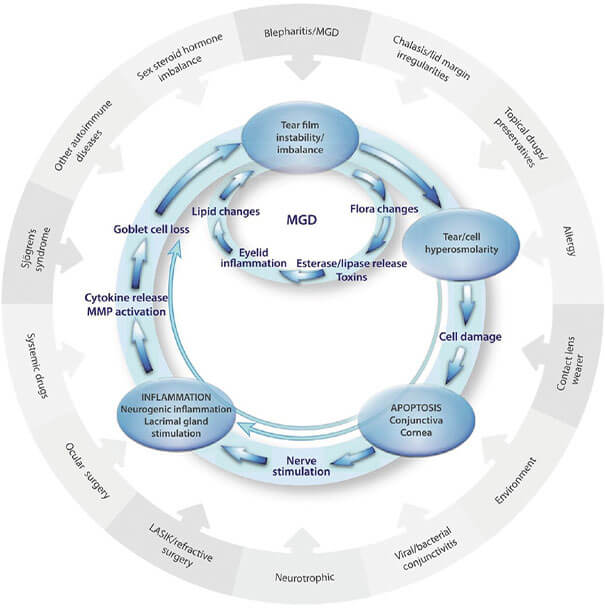
We now understand that dry eye is a multifactorial condition, meaning it has several contributing causes. According to leading research, it involves a loss of balance in the tear film and the surface of the eye. This can include:
- Tear film instability (tears not staying on the eye long enough)
- Increased dryness and concentration of the tear film
- Inflammation of the eye surface
- Damage to the delicate tissues of the eye
- Changes in how the eye senses discomfort
What Causes Dry Eye
Dry eye can develop for a number of reasons, often with more than one factor involved:

Lack of Tear Layer
Dry Eye can be caused by problems with tear production, including reduced watery (aqueous) tears or by poor quality of the oily layer (meibum) leading to faster tear evaporation.

Inflammation
Inflammation of the eye surface can be caused by a lack of tears themselves or by long term wear of contact lenses, ocular allergies, infections and certain systemic or ocular medication.
Post-treatment
Dry Eye can also develop after treatments such as LASER refractive surgery.

Autoimmune Diseases
Dry Eye is also linked to many autoimmune diseases such as Sjögrens syndrome and rheumatoid arthritis.
Ageing
Dry Eye has also been linked to changes in hormone levels and is thought to be more common as we get older.

Screen Time
Increased screen use, and reduced blinking as a result, causes tears to evaporate more quickly and prevents tears spreading evenly across the surface of the eye.

Long-term Contact Lens Wear
Lenses sit directly on the tear film that naturally lubricates and protects the eye. Over time, this is disrupted by reduced oxygen flow to the cornea and increased tear evaporation. Contacts may also absorb some of the eye’s natural moisture.

Rosacea
An inflammatory skin condition that often affects the eyelids and the oil-producing glands (meibomian glands), leading to poor tear quality and increased evaporation of the tear film.
Certain Medications
(Both general and eye-related). Some drugs, such as antihistamines, antidepressants, and decongestants, can reduce tear production or alter tear composition, leading to increased dryness and irritation.
Nutrition and Dietary Causes
Deficiencies in essential nutrients like omega-3 fatty acids and vitamin A can reduce tear production and disrupt the stability of the tear film.
A More Personalised Approach to Treatment
Because dry eye is complex and varies from person to person, effective treatment starts with understanding the underlying causes.
At our Dry Eye Centre, we carry out a series of detailed assessments to identify what is contributing to your symptoms. This allows us to create a tailored treatment plan designed to provide longer-lasting relief, not just temporary symptom control.
Our Modern Lifestyle
At Dry Eye Centre we believe that the increase in Dry Eyes and Dry Eye Syndrome is linked to our modern lifestyle. The majority of us now use a computer, mobile phone or tablet on a regular basis.
When we perform these tasks we concentrate very hard and we tend to stare at the screen. This reduces the amount of blinking from around 10-20 times a minute to, in some cases, only once in 5 minutes. Often when using the computer the blinks that we make are not full ones.
Blinking is important as it distributes the tears over the eye lubricating the surface and also providing oxygen and nutrients to the eye. If we are not blinking enough we do not lubricate the eye leading to the symptoms such as burning that we associate with dry eyes. As there is not enough lubrication there is also an increase in friction between the lid and the eye and this can exacerbate symptoms even more.