What is Aqueous Deficiency?
Aqueous deficiency (also known as aqueous deficient dry eye) is a type of dry eye condition where the lacrimal glands fail to produce enough of the watery (aqueous) layer of your tears. This layer is essential for keeping the eye surface hydrated, nourished, and protected.
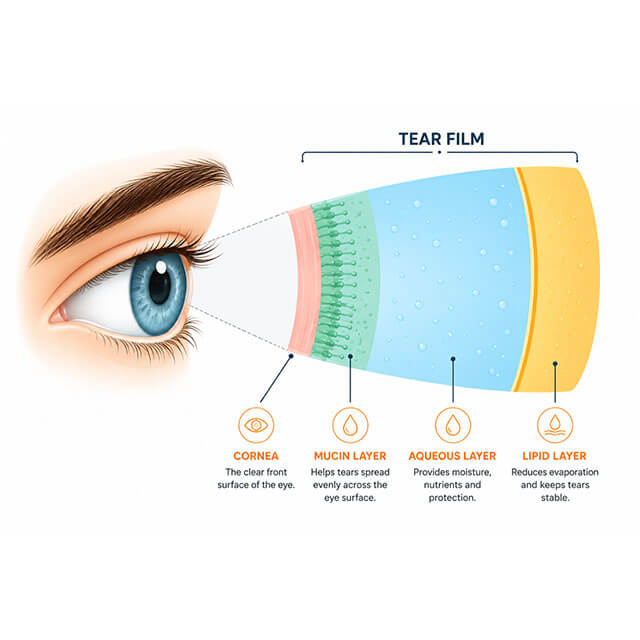
Tears are made up of three layers: oil, water, and mucus. In aqueous tear deficiency, the water layer is reduced, which means your eyes cannot maintain proper moisture. This leads to dryness, irritation, and inflammation over time.
It’s important to distinguish this from evaporative dry eye, where tears are produced normally but evaporate too quickly due to oil layer issues. Many patients actually experience a combination of both, but identifying aqueous deficient dry eye specifically allows for more targeted and effective treatment.
Who Does It Impact?
This condition is more common in:
- People over 40
- Women (especially post-menopause)
- Individuals with autoimmune conditions
- Those taking certain medications
If left untreated, aqueous deficiency can affect vision quality, damage the eye surface, and significantly impact daily activities such as reading, driving, or screen use.
Aqueous Deficiency Symptoms
Symptoms of aqueous deficient dry eye can vary from mild irritation to persistent discomfort. Many patients find that symptoms worsen throughout the day or during screen use.
Common symptoms include:
Persistent dryness or a gritty sensation
Burning or stinging in the eyes
Redness and irritation
Blurred or fluctuating vision
Sensitivity to light
Eye fatigue, especially when reading or using screens
Excessive watering (a reflex response to dryness)
In more severe cases, patients may experience:
Difficulty wearing contact lenses
Increased risk of eye infections
Pain or inflammation of the eye surface
Recognising these symptoms early is key to seeking effective aqueous deficient dry eye treatment before the condition worsens.
Common Causes of Aqueous Deficiency
There are several underlying causes of aqueous tear deficiency, and identifying the root cause is essential for long-term management.
Understanding what causes aqueous deficiency helps guide the most appropriate treatment plan.
Key causes include:

Ageing
Tear production naturally decreases with age, making aqueous deficiency more common in older adults.

Autoimmune Conditions
Conditions such as Sjögren’s syndrome, rheumatoid arthritis, and lupus can attack the tear-producing glands.

Medications
Certain medications can reduce tear production, including: antihistamines, antidepressants, blood pressure medications and hormonal treatments.

Hormonal Changes
Particularly in women during menopause, hormonal shifts can significantly affect tear production. Birth control medication may also affect aqueous production.

Medical Conditions
Diabetes, thyroid disorders, and other systemic health issues can contribute to aqueous deficient dry eye.

Environmental Factors
Air conditioning, heating, wind, and prolonged screen use can worsen symptoms, even if they are not the primary cause.
Aqueous Deficient Dry Eye Treatments
At our specialist clinic, aqueous deficient dry eye treatment is tailored to your specific needs. While over-the-counter drops may provide short-term relief, professional care focuses on long-term improvement.
The right combination of treatments can significantly improve comfort, vision, and long-term eye health.
Treatment options may include:
Preservative-free Artificial Tears
High-quality lubricating drops designed to supplement the missing aqueous layer.
Prescription Eye Drops
Anti-inflammatory medications that help improve tear production and reduce irritation.
Punctal Plugs
Tiny devices inserted into the tear ducts to reduce tear drainage and retain moisture on the eye surface.
Learn more on our punctal plug treatment page.
Advanced Dry Eye Therapies
In-clinic treatments designed to support tear film stability and ocular surface health.
Explore our advanced dry eye treatment options.
Nutritional Support
Omega-3 supplements may help support overall tear quality and eye health.
Lifestyle and Home-care Guidance
Personalised advice to manage symptoms between treatments.
See our at-home dry eye care advice.
Aqueous Tear Deficiency Support at Dry Eye Centre
At Dry Eye Centre in London, we specialise in diagnosing and treating aqueous deficient dry eye using advanced technology and a patient-first approach.
Our experienced clinicians:

Carry out detailed tear film assessments

Identify the root cause of your symptoms

Create personalised treatment plans

Offer access to the latest dry eye treatments
Pioneers in Our Field
Patients travel from across the UK to receive expert care, clear guidance, and lasting relief from aqueous deficiency. Dry Eye Centre is the first clinic dedicated solely to the diagnosis and treatment of dry eye in the UK.
Aqueous Deficiency FAQs
Yes, some homecare strategies can help relieve symptoms. These include using a humidifier, taking regular screen breaks, staying hydrated, and applying warm compresses. However, home remedies alone are unlikely to resolve aqueous tear deficiency, so professional treatment is often needed for long-term relief.
Aqueous deficient dry eye is one of the two main types of dry eye disease, though it is less common than evaporative dry eye. It is particularly prevalent in older adults and individuals with autoimmune conditions. Many patients experience a combination of both types, which is why professional diagnosis is important.
Aqueous deficiency can be caused by ageing, autoimmune diseases, medications, hormonal changes, and certain health conditions. Identifying the cause is key to choosing the most effective aqueous deficient dry eye treatment and managing symptoms long term.
‘Aqueous deficient’ means that your eyes are not producing enough of the watery component of tears. This leads to dryness, irritation, and an unstable tear film, which can affect both comfort and vision.
Yes, some homecare strategies can help relieve symptoms. These include using a humidifier, taking regular screen breaks, staying hydrated, and applying warm compresses. However, home remedies alone are unlikely to resolve aqueous tear deficiency, so professional treatment is often needed for long-term relief.
Aqueous deficient dry eye is one of the two main types of dry eye disease, though it is less common than evaporative dry eye. It is particularly prevalent in older adults and individuals with autoimmune conditions. Many patients experience a combination of both types, which is why professional diagnosis is important.
Aqueous deficiency can be caused by ageing, autoimmune diseases, medications, hormonal changes, and certain health conditions. Identifying the cause is key to choosing the most effective aqueous deficient dry eye treatment and managing symptoms long term.
‘Aqueous deficient’ means that your eyes are not producing enough of the watery component of tears. This leads to dryness, irritation, and an unstable tear film, which can affect both comfort and vision.